


This weekend in Texas, Democrats scored a stunning victory in a special State Senate election. Despite being outspent $2.4 million to $200k, Taylor Rehmet defeated Trump-endorsed Leigh Wambsganss by 14 points in a district that Trump won by 17 points in 2024. This 31 point swing to the left means this district will be represented by a Democrat for the first time in 35 years.
The 2026 midterms have been uniquely defined by gerrymandering. Maps in many states are still in flux, and parties are relying more on how many districts they can draw than ever. Rehmet’s surprise victory shows what can happen when Independents reject a partisan gerrymander.
A new report from the Welcome Democracy Institute explores how voters are reacting in ground zero of the gerrymandering wars: Texas. Welcome Democracy Institute focused on how the new maps disenfranchise independent voters. It’s a timely analysis: according to recent Gallup data, a record 45% of U.S. adults now identify as political independents, surpassing previous highs and outpacing Democratic and Republican identification.
How Gerrymandering Disenfranchises Independents
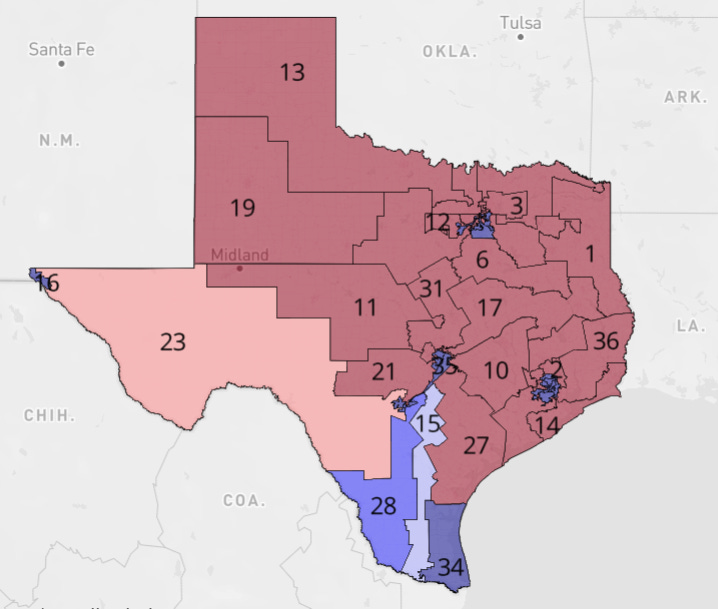
The Welcome Democracy Institute found that Texas’s Old Map had already diluted the power of independents but Texas’s New Map dilutes their power even more. For example, in the New Map, 24 of 38 Texas’s U.S. House seats would be winnable for the incumbent party even if ⅔ of likely nonpartisan voters support the opposing party.
Old Map (2023 - 2025)
New Map (2026)
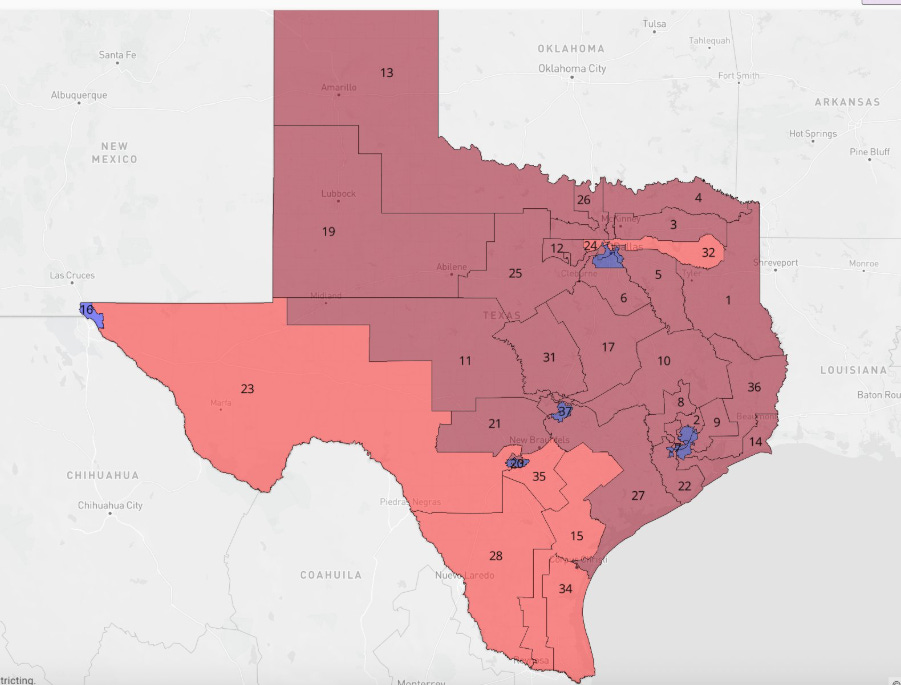
In the 2024 congressional elections, Republicans won 58% of the vote in Texas and 66% of the seats (25 of 38). The newly redistricted Texas congressional map would create a much larger gap between vote share and seat share: under the same election results, Republicans would win five additional seats, or 79% of the state’s congressional delegation with still only 58% of the vote.
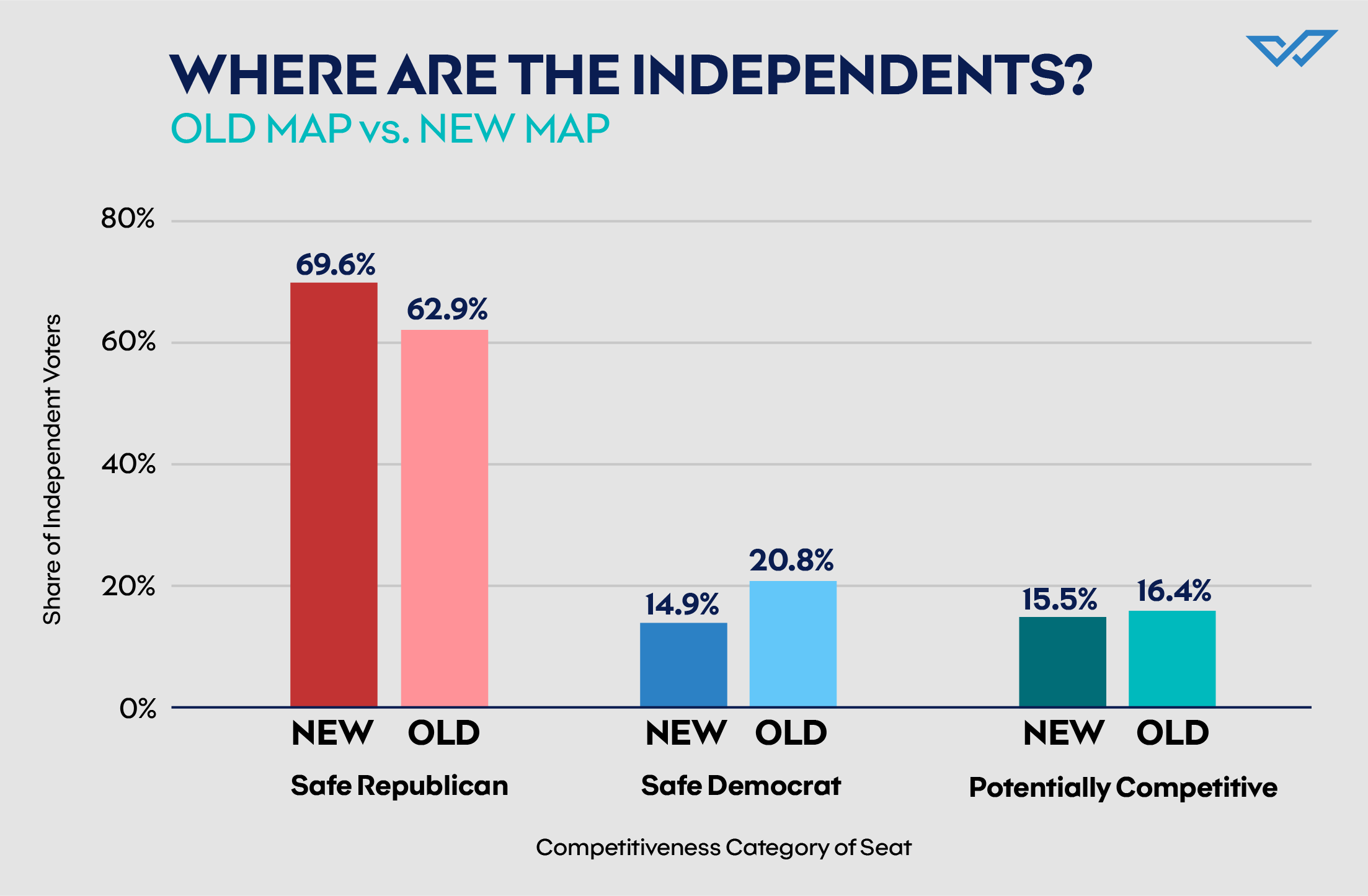
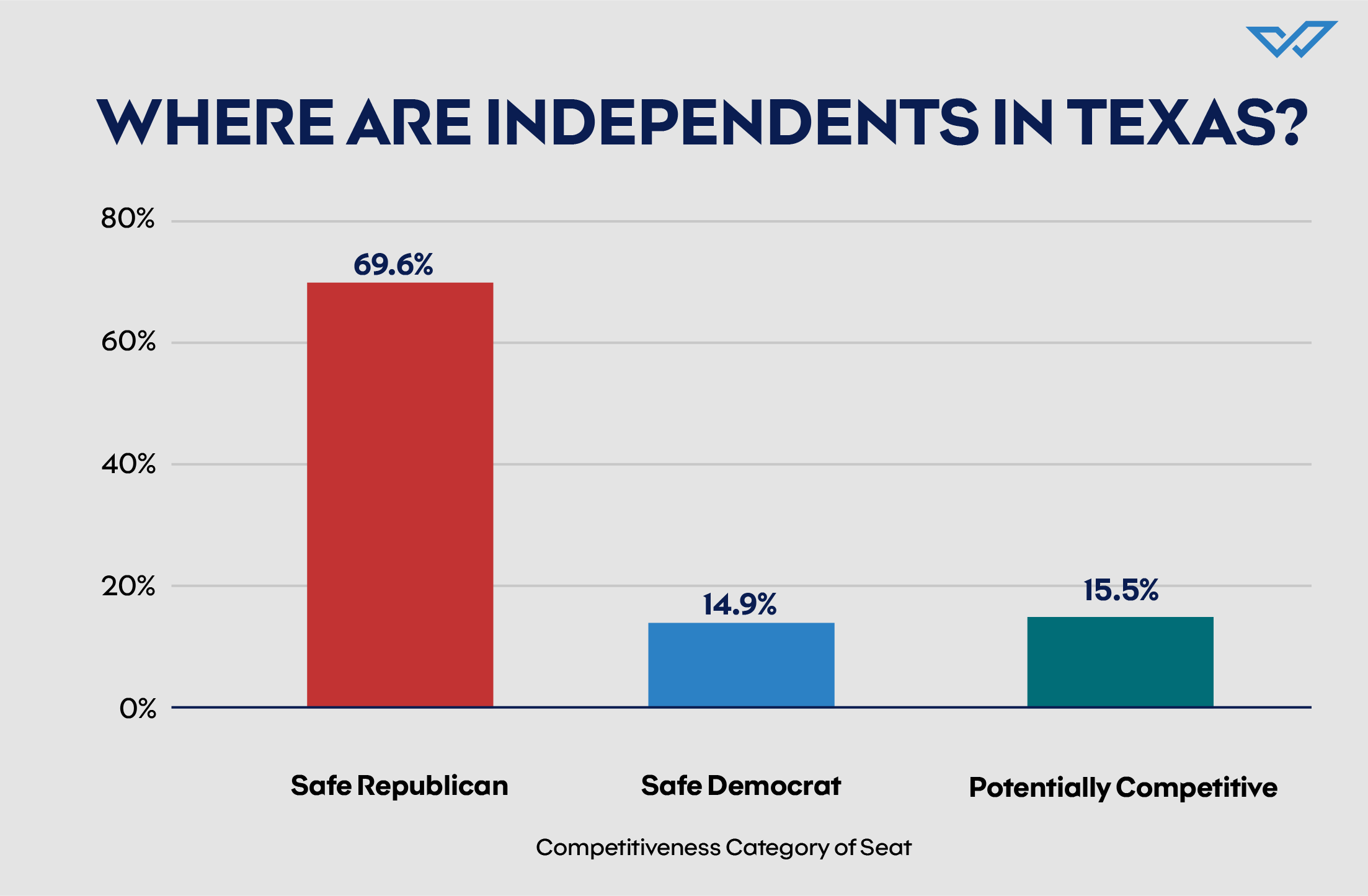
Texas was already gerrymandered to favor Republicans prior to 2025, but the mid-decade redraw further diluted the power of independents. In the New Map, 70% of modeled independents are in seats that are widely considered to be Safe Republican (presidential margin of Trump+20 or higher). An additional 15% are located in Safe Democratic seats (Harris +20 or higher in 2024).
Just 15% of all modeled independents in the new map are in what we are calling “Potentially Competitive seats,” which are seats that went between Trump +20 and Harris +20.
This may not be surprising, given that there are so many Safe Republican seats in Texas. However, when WDI analyzed the average partisan breakdown across all districts in these categories, further analysis shows that Potentially Competitive seats have the lowest share of independent voters in them. Only 11.6% of voters in Potentially Competitive seats are modeled independents, while 14.6% of voters in Safe Democratic seats are modeled independent and 17.4% of voters in Safe Republican seats are modeled independents.
Voters Don’t Want The Current Level of Gerrymandering
In addition to comparing the impact of gerrymandering on independents and competition, Welcome Democracy Institute also wanted to get a sense of how voters viewed the ongoing gerrymandering wars. WDI commissioned a survey that sought to explore how voters would gerrymander if they could decide the extent of gerrymandering. They provided Democrats and Republicans in Texas hypothetical vote shares for their parties and asked them what share of the seats their party should win.
WDI found that members of both parties gave their preferred party the majority of the seats in all conditions.
Democrats gave their party:
58% of seats in the 40% vote scenario
61% of seats in the 50% vote scenario
68% of seats in the 60% vote scenario
This compares to Illinois, where Democrats won 57% of the vote but the map they drew gave themselves 82% of the seats.
Republicans gave their party:
54% of seats in the 40% vote scenario
59% of seats in the 50% vote scenario
64% of seats in the 60% vote scenario
The results suggest that voters prefer a less aggressive approach to gerrymandering than politicians are currently pursuing. Democrats give themselves a slightly larger share of seats in each scenario.
Breaking The Doom Loop
Voters don’t support the level of gerrymandering we are seeing in America, and with more and more voters identifying as independent, gerrymandering is further diluting their votes. The report is a helpful reminder that the forces driving polarization are often not voters, but rather party elites and policymakers. It highlights the need for depolarizing candidates, who sadly, are retiring at a rapid clip. Voters have agency too. If enough Independent voters reject the gerrymanders in their states by voting against the party that imposed it, the gerrymander could fail. In Texas, the two seats where the Republican gerrymander is most likely to fail are Texas’s 15th and 34th. Check out our latest video with the candidates in those races: