


After months of speculation, today’s revelation of the Democratic National Committee’s 2024 postmortem reveals a surprising truth: the report is filled with recommendations that the party move to the center, making controversial claims for a party that is now majority-liberal and heavily influenced by progressive advocacy groups.
Many of the findings validate our Deciding to Win report, the defining autopsy of 2024.
Reid Epstein reported:
The first potential 2028 Democratic presidential candidate to weigh in on the D.N.C. draft report is Rahm Emanuel, the former Chicago mayor and ambassador to Japan.
“It’s not worth the paper it’s written on,” Emanuel said in a brief interview. “The New York Times poll on Democratic primary voters showed that two to one believe the party should move center and avoid the culture wars and embrace policies that move families forward on firmer footing.”
Interestingly, the autopsy actually says a lot of that! Maybe too much for the DNC to handle!
Here are three:
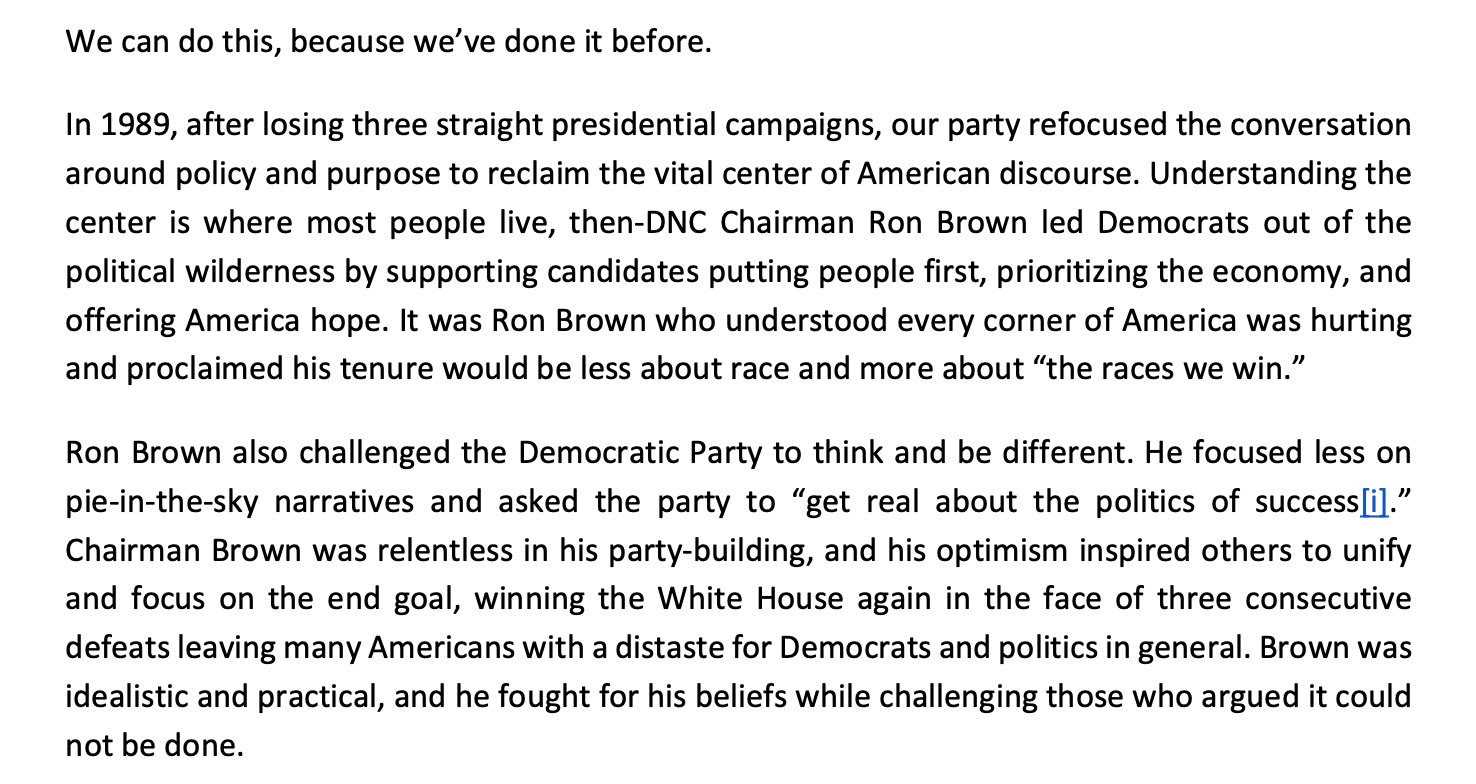
Explicitly invokes the 1989 course correction led by moderate and conservative Democrats to “reclaim the vital center” and be “less about race” and less about “pie-in-the-sky narratives.”1
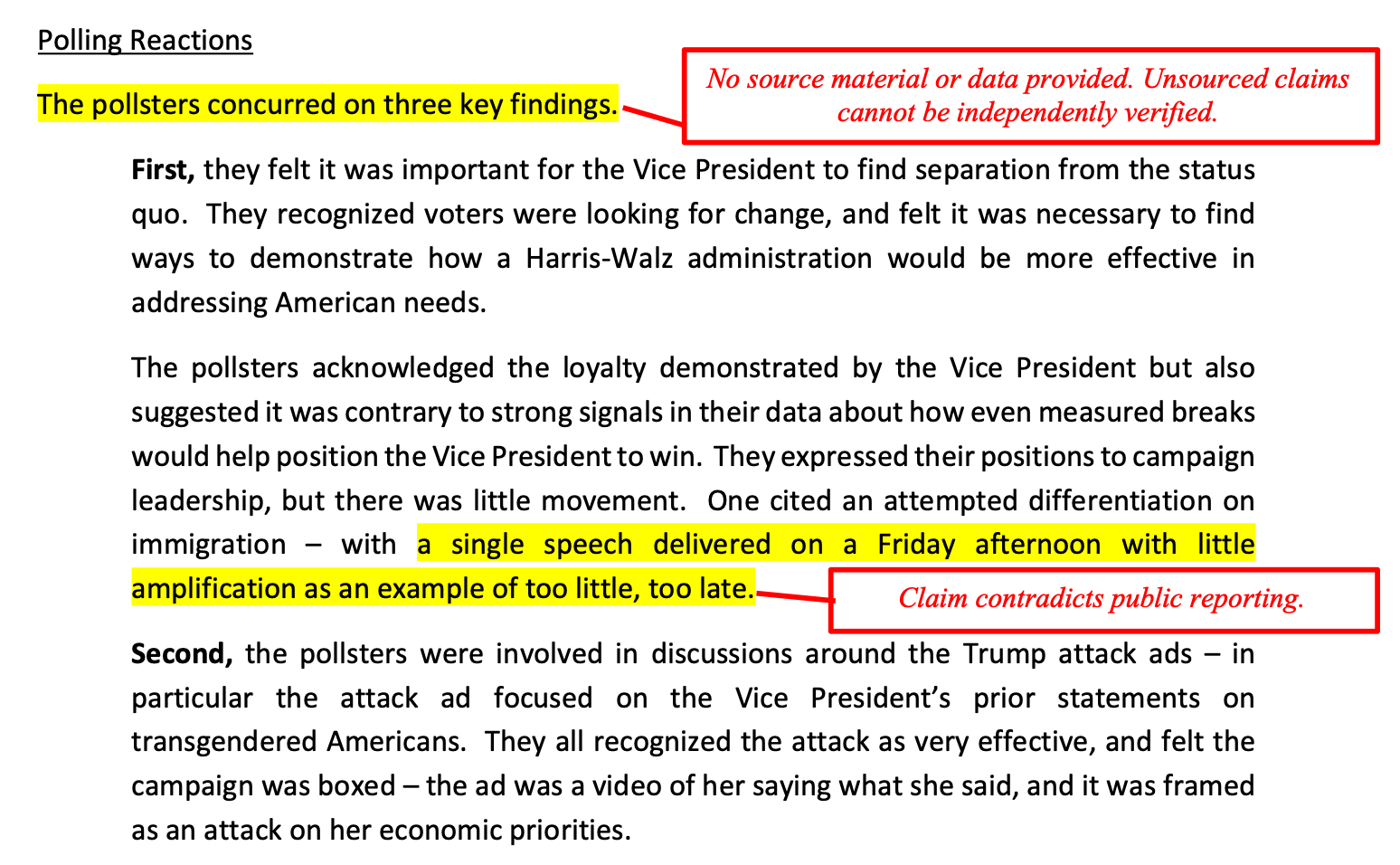
Called for more separation from Biden on immigration. Page 72
The report elevates pollster concerns that Kamala Harris needed “breaks” with the Biden Administration to win, and that “attempted differentiation on immigration” was “too little, too late.
Cited a rejection of “identity politics” as key factor for successful candidates in case studies on North Carolina, Arizona, and Nevada. Page 22; Page 38


The DNC report, titled Build to Win, echoes many of the themes of Welcome’s Deciding To Win postmortem and upcoming WelcomeFest, the largest annual gathering of centrists themed Building to Win. The echoes may have been too loud.
Most Democrats now admit voters distrust the party on both cultural issues and the basics of government, like immigration and public safety. But most won’t admit that voters have good reason not to trust the party: Democrats ran to the left on every measure since 2012, from bill sponsorship to the party platform. Voters noticed, and didn’t like it. That’s the key takeaway from Deciding to Win, and possibly a reason the DNC’s own autopsy was not released.
More on Ron Brown here, from a 1989 LA Times article on a DLC meeting: “Brown, the Democrats’ first black chairman, has long been closely linked to the party’s traditional liberal base in the North and industrial Midwest, while the conference was sponsored by the Democratic Leadership Council, a group of moderate-to-conservative officeholders. So Brown’s suggestion that Democrats need to broaden their horizons served as striking reinforcement for the notion that dominated the meeting: the Democratic need to regain support among middle-class Americans if they are to have a fighting chance to regain the presidency in 1992.”
Democrats seem to reject moving to the center on two key cultural wars: immigration and transgender issues. They favour the status quo (under the current DNC and congressional leadership) and status quo ante (under Biden).
They think moving to the left on economics (specially healthcare) is a viable route without reconsidering the party brand on identity politics.
This simply won't work.
And given the fiscal problems the US is confronting and congressional rules regarding the filibuster and reconciliation, more spending on healthcare will not be easy to arrive at.
Democrats opinions on foreign policy aren't much better. The rise once again of pacifism and campism is just a terrible foundation for the next administration's approach to an increasingly hostile against the West world in which China continues to rise.
Affordability as a slogan is just empty platitudes, while the country confronts real problems with its manufacturing capability (specially on defense products), continued reliance on oil and the hard trade off of allowing Silicon Valley to drive most growth at the expense of increased energy prices and misinformation.
"Deciding to Win" was a much better autopsy.
But the Ron Brown paragraphs presaged the Clinton victory in 1992. Howard Dean's "50-State Strategy" (conspicuously unmentioned) was the forerunner to Obama winning in 2008. The problems with the Democratic Party are pretty easy to ascertain:
1. Compete Everywhere (including rural areas and traditionally non-Dem areas).
2. Move away from leftist dogma and build the center, especially in suburbs and swing areas.
3. Build up the state and regional organizations and focus on the grassroots upward, not the other way around.
The single biggest statement progressives and Democrats should take from this and other "autopsies" are that the current Democratic coalition is not large enough to win solely on its own. It needs to branch out.