


While Zohran Mamdani’s victory last night has been heralded as a model for national Democrats, the real story is more complicated. The results that actually matter for the party’s future came out of New Jersey and Virginia, not New York City.
Governors-Elect Mikie Sherrill and Abigail Spanberger were able to win decisive victories in competitive races last night. The final results are still trickling in but at the moment Governor-elect Sherrill leads by 13 points and Governor-elect Spanberger by 15 points. According to NBC exit polls, Spanberger won Independents by 15%, moderates by 35% and voters who view both parties unfavorably by a whopping 49%. Flipping a Governor’s mansion with that type of support is far more instructive for the Democratic Party’s future than winning a mayoral race in a city that hasn’t elected a Republican in 20 years. In fact, Sherrill and Spanberger won by larger margins in swing states than Mamdani did in New York City, something that should baseline the takes.
It’s worth noting that progressives had forecasted a poor performance for Spanberger and Sherrill due to their moderate stances - but they crushed expectations. Prediction markets had forecast that the most likely outcome was Sherrill would win by 6-9 points, but she is on track to win by more than 12 points. Similarly, in Virginia, markets thought the most likely outcome was Spanberger winning by between 9-12 points, but she is on track for more than 14 points.
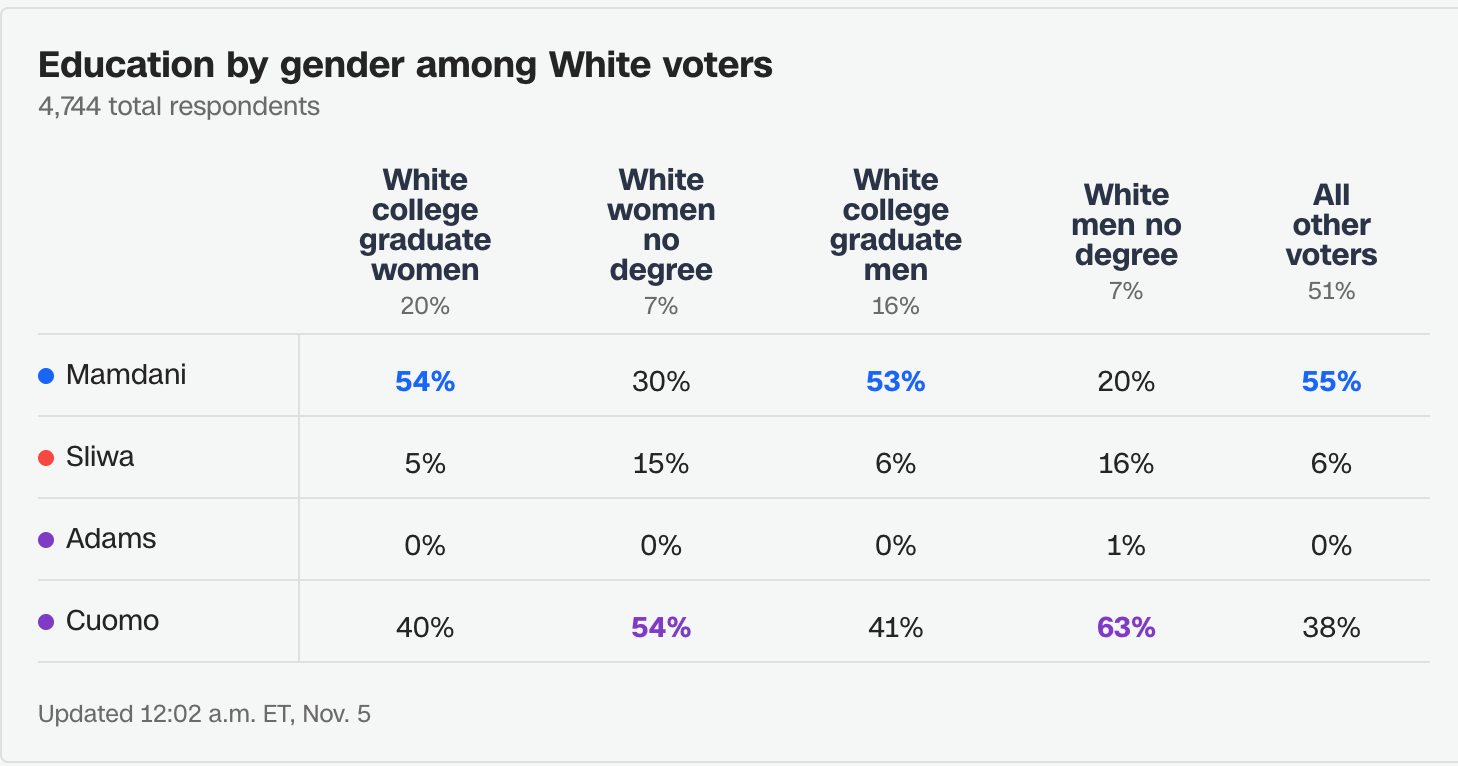
On the other hand, Mamdani’s performance isn’t the type that can create national victory. Among the white non-college voters that Democrats need to win the Senate and the House in 2026, Mamdani performed abysmally, winning only 30% of white women without a college degree and 20% of white men without a college degree.
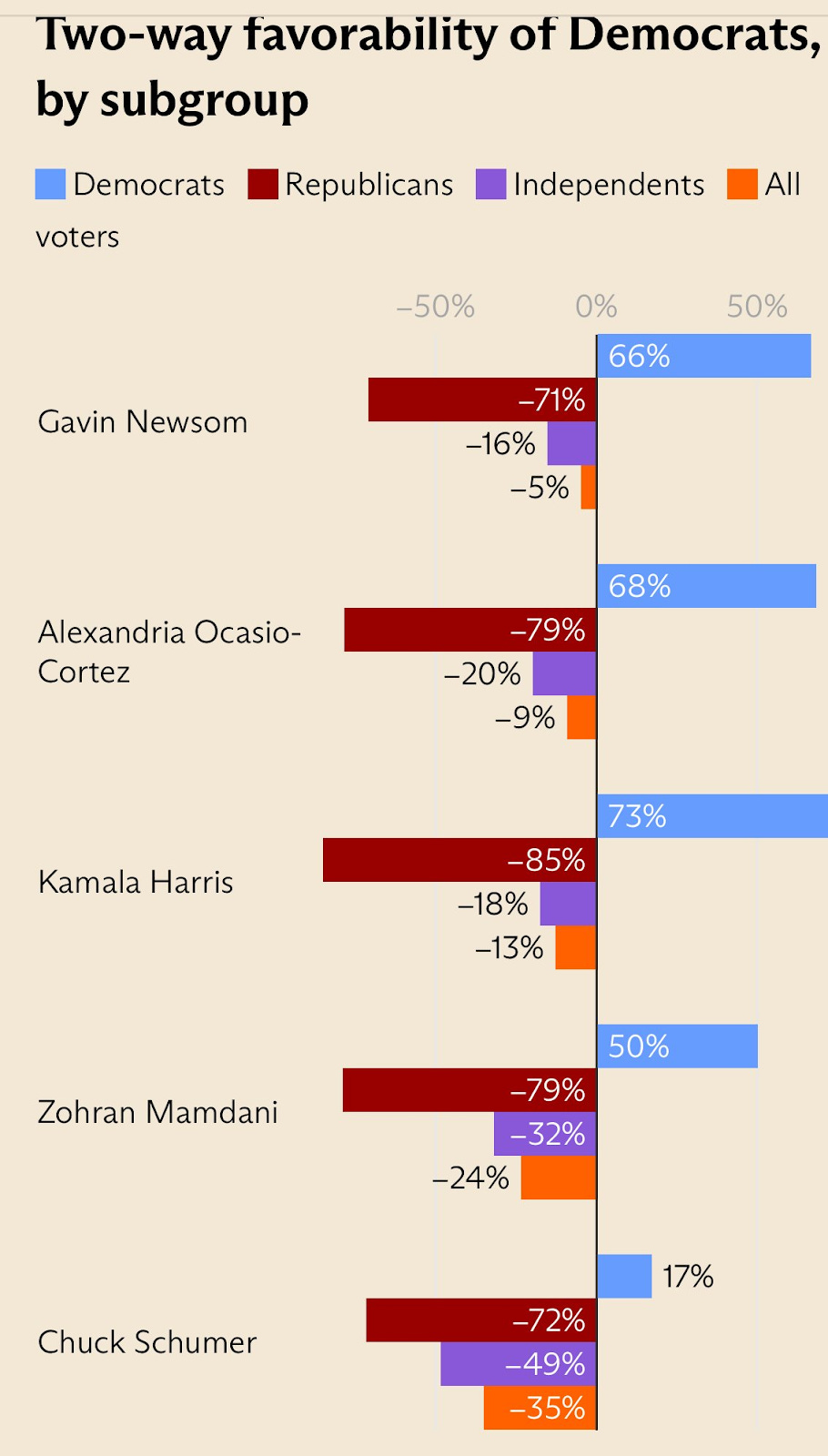
Yet national attention is laser-focused on Mamdani and what his victory supposedly means for Democrats nationwide. Pundits have been suggesting that Democrats can learn from Mamdani’s success. A recent poll from Layksha Jain at The Argument paints a different picture: Mamdani is deeply unpopular and replicating his approach nationwide would be a disaster for the party. Mamdani is so unpopular among Republicans and Independents that he already has higher unfavorables than some of the most prominent Democrats in the country:
The results are grim for Mamdani. Among self-identified Democrats and Independents alike and among voters at large, his numbers are actually considerably worse than those of Newsom, Ocasio-Cortez, and Harris.
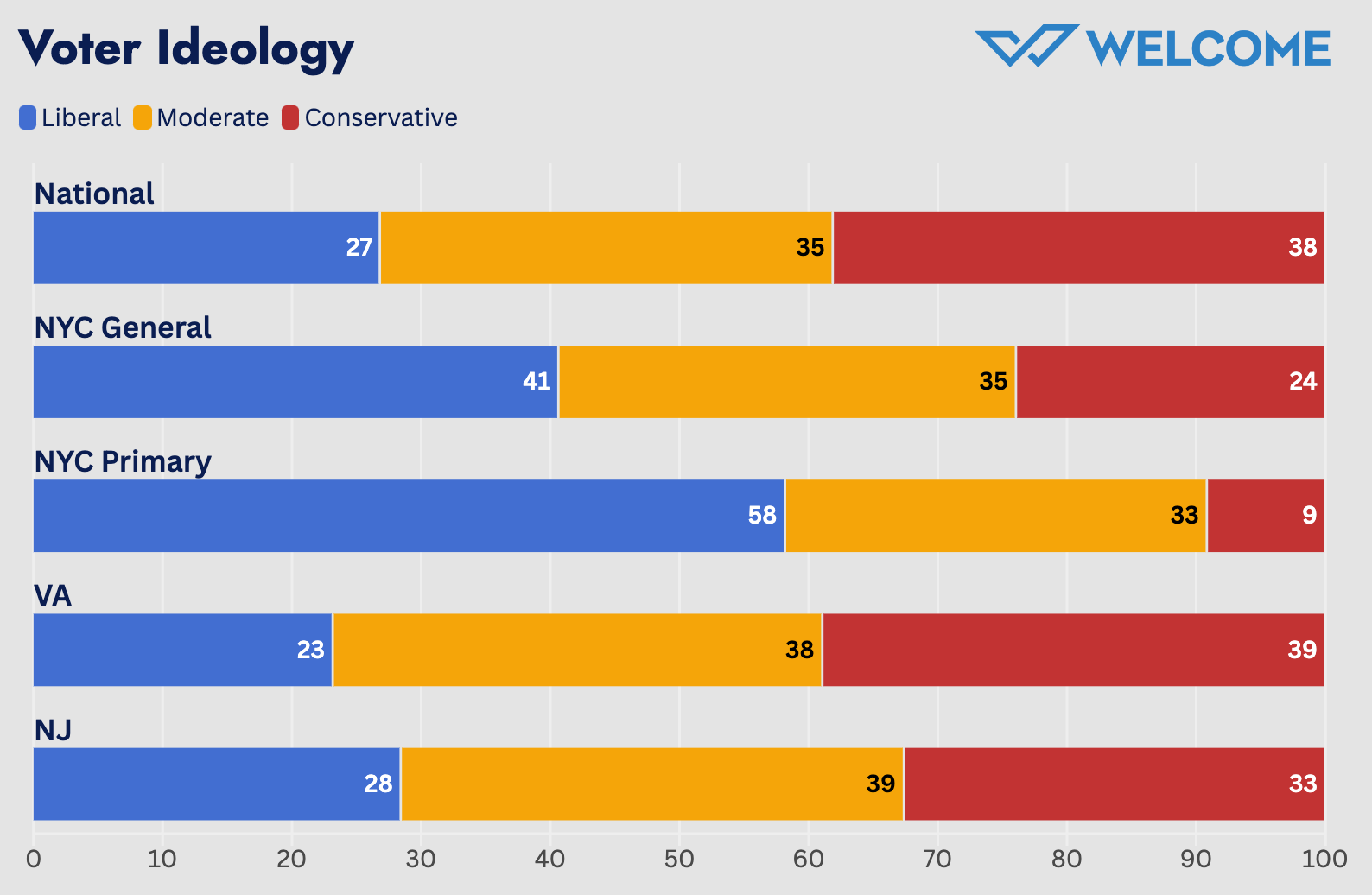
So, why is Mamdani able to win given these poor national numbers? He won because the electorate around him is far more liberal than the country at large. That may be obvious, but the scale of difference matters. Let’s consider the electorate from the three big elections last night.
The chart below compares the ideology of the electorates in New York City, Virginia, New Jersey, as well as the national electorate based on how they described themselves. When you compare the ideological makeup of these three electorates and nation as a whole, the difference is staggering. In NYC, conservative and very conservative voters barely register. That means the kind of campaign message that resonates in Queens might lose by double digits in suburban Richmond or South Jersey.
That contrast was on full display in the campaigns that Sherrill and Spanberger ran. They both centered their message on economic security, local trust and pragmatic solutions while refusing to get involved in national ideological battles. Sherrill focused on affordability and fiscal management while Spanberger was able to win over a large number of independents and moderate Republicans with her tough-on-crime credentials and bipartisan reputation. These moderate approaches allowed them to build broad coalitions across party lines and provide a roadmap for Democrats who want to win nationally.
This matters because Democrats don’t just need to win, they need to win while competing in a biased map that leans several points to the right. As Simon Bazelon showed in our recent Deciding to Win report, Democrats often need to clear two-, three-, even four-point national margins to build governing majorities in the House and Senate. That math demands candidates who can connect beyond the base, not just within it.
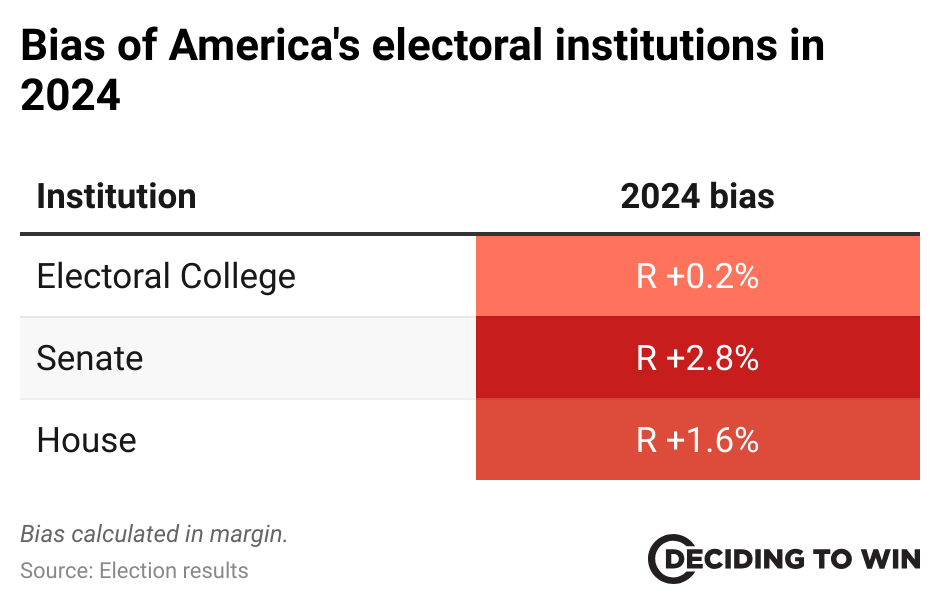
And that bias is increasing as we head into 2026. Due to an unprecedented amount of mid-decade gerrymandering, Democrats are already at a disadvantage. Texas, North Carolina and Ohio have passed new maps that could net up eight Republican seats. States like Florida, Kansas, and Indiana may also alter the maps to gain additional Republican seats. Democrats will look to add seats in California following last night’s passage of Prop 50, and have seen two new competitive seats drawn in Utah to help bolster their chances.
With all these changes, and with the fate of the VRA hanging in the balance, Democrats may need to win the national margin by between 4.4 and 5.6 points in order to have a chance of winning the majority in the House.
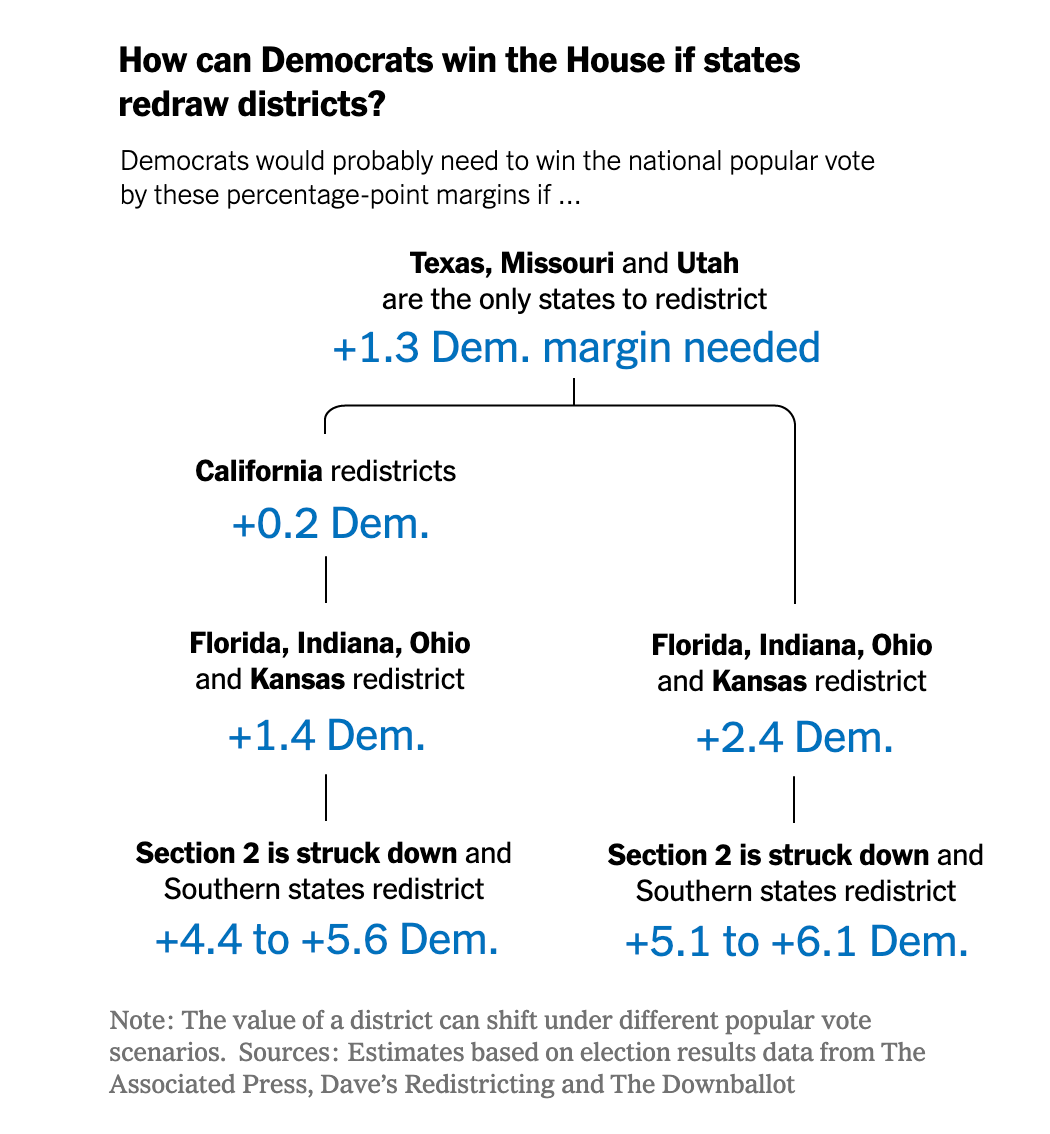
That is what makes last night’s wins by Sherrill and Spanberger so important. They faced competitive general elections in states that swung to the right in 2024 and they won by running strong moderate campaigns that touted support from Republicans in Virginia and New Jersey as well as law enforcement. They ran a type of campaign that Democrats across the country who are running in purple and red districts can look to as we look to build and sustain majorities.
So yes, Mamdani’s victory is a story, but it should not be the story of last night. The path to 218 doesn’t run through Manhattan. It runs through places like Presque Isle, Eau Claire, and York. And if Democrats want to win back the House in 2026 and flip the White House in 2028, that is where the real lessons of Election Night lie.