


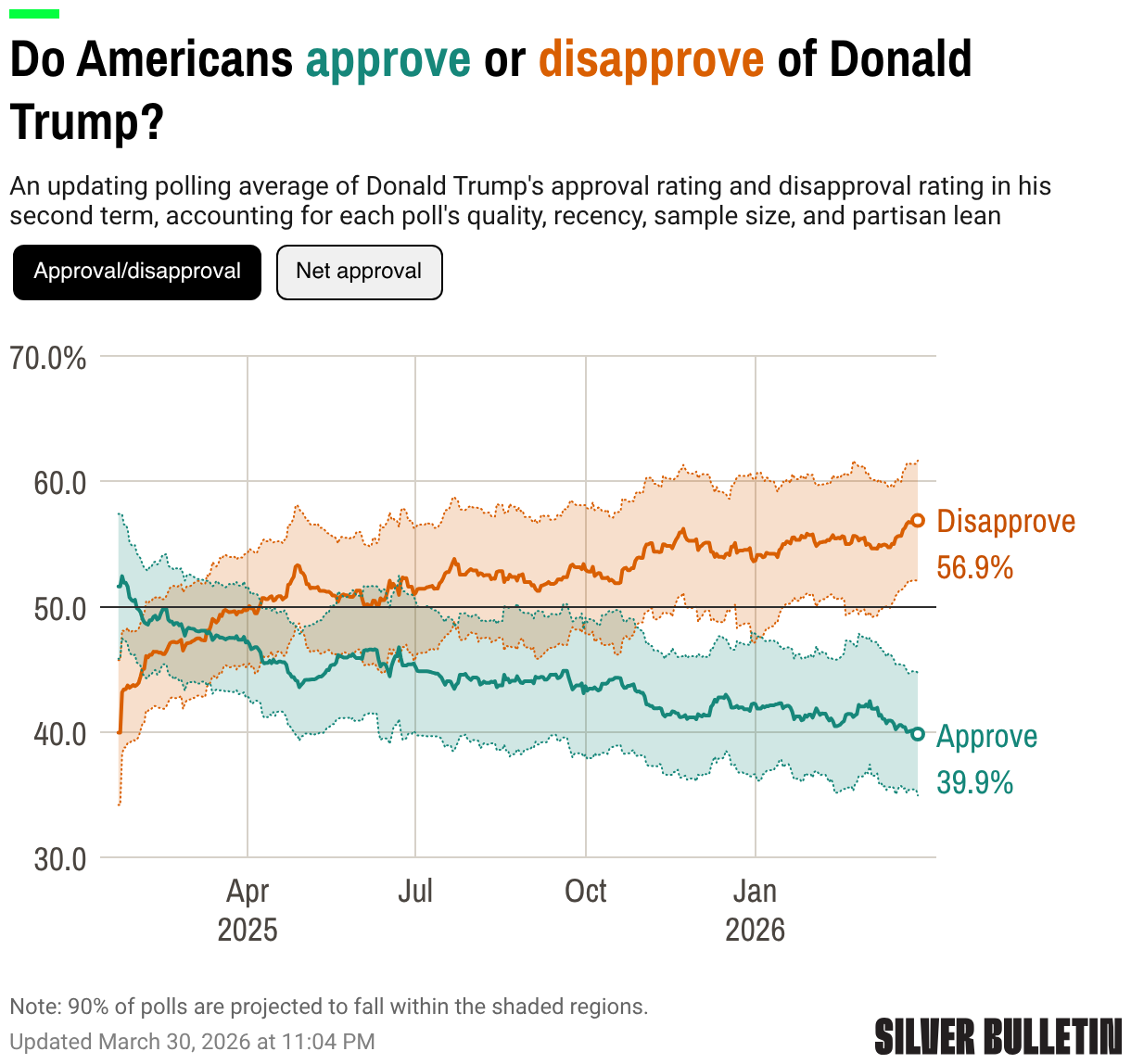
Trump’s average approval rating dropped below 40% for the first time, according to Nate Silver:
Net Intensity
The intensity of these ratings is most interesting. And a good reminder of how different things were after Trump’s second inauguration.
Look at the movement between the “Strong disapprove” and “Strong approve” lines:
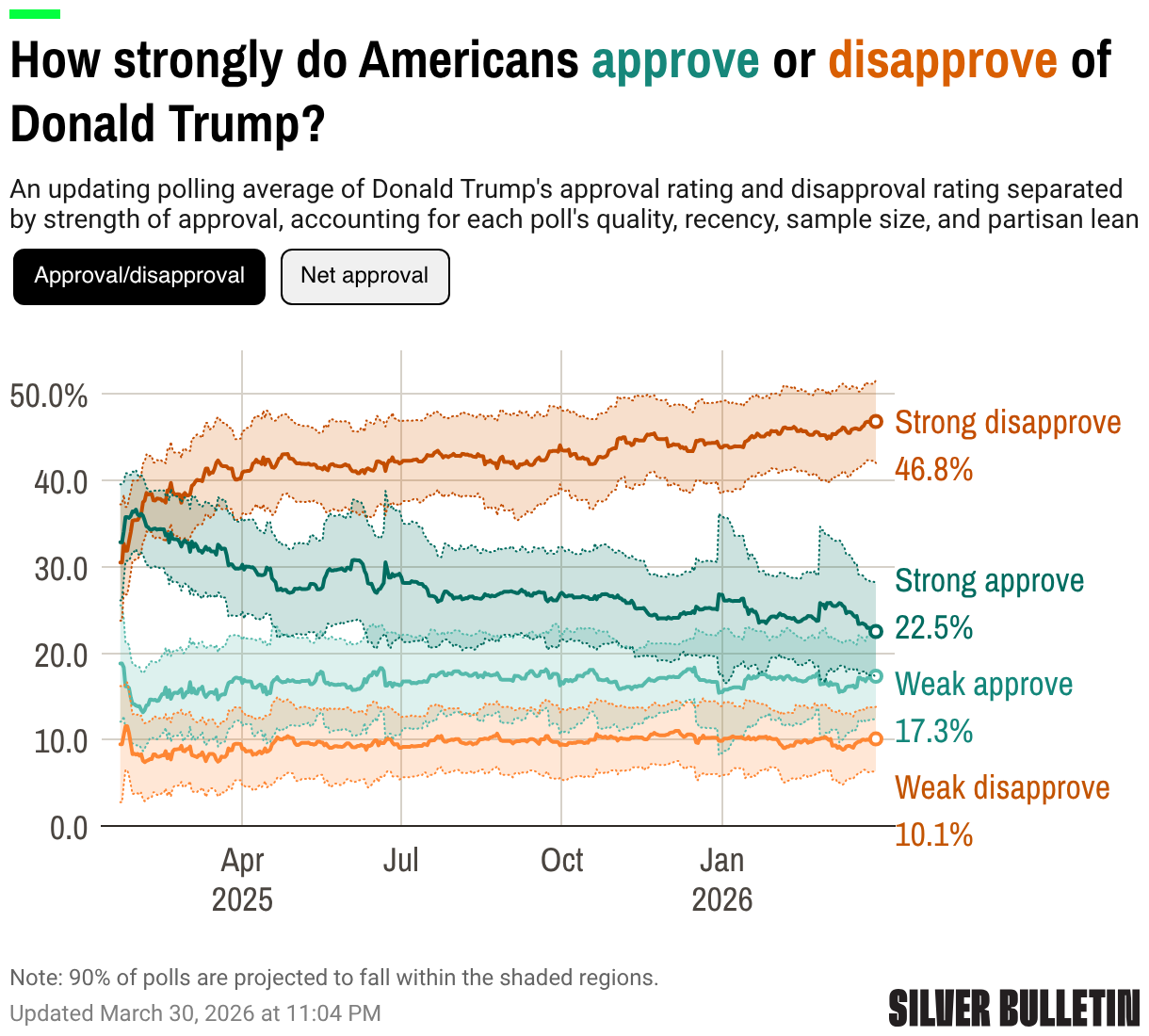
It may be hard for those of us who read politics newsletters to believe, but just 30% of Americans strongly disapproved of Trump two years ago. That is now up to 47%. More than the MAGA base “Strongly approved” of Trump shortly after inauguration, with 36%. It is now 23%.
Pollsters often report “Net Approval” for the difference between approve and disapprove. Let’s refer to the difference between “Strong approve” and “Strong disapprove” as Net Intensity.
Following inauguration, Trump’s Net Intensity was +2. It is now -24. And cracking 50% Strong disapprove looks possible.
Relative Popularity
Nearly half the country really dislikes Trump. And less than a quarter really likes him. This dynamic is essential to preventing what political scientists call “competitive authoritarianism.”
Daniel Stid had a thoughtful piece this time last year on the increasing risks from Trump. Here’s a bit from Competitive Authoritarianism Comes for Civil Society:
Political scientists Steven Levitsky and Lucan Way first developed the concept of competitive authoritarianism in the early 2000s. Their goal was to describe and classify a growing number of hybrid regimes in which elements of ongoing democratic competition coincided with undeniable patterns of autocratic rule. Today, Viktor Orbán’s Hungary, Narendra Modi’s India, and Recep Tayyip Erdoğan’s Turkey stand as classic examples of this type of regime.
Trump has long made no secret of his admiration for these strongman rulers. In his second term, the U.S. will come to operate more like their countries.
One optimistic take is that these leaders have been far more popular than Trump. Pew Research shows majorities of Turkish adults held favorable views of Erdogan for most of the last thirteen years, with a peak of 75%. Pew has had Orban at 56% among Hungarian adults, a majority he has sustained for a decade. Modi has been even more popular in Pew polling, reaching 88%.
MAGA’s unpopularity is key, not only for the midterms but for the long game.
Warning!
Stid’s piece has one other vital warning. Let’s not get high off the fumes from Trump’s slide into unpopularity:
It will once again be tempting for progressive philanthropists, advocates, and activists to intermingle their pre-existing policy preferences with their efforts to defend democracy. This helps them maintain their intersectional commitments and alliances on immigration, climate, DEI, trans rights, political economy, etc. But it makes it much harder to build the cross-partisan coalition of supporters that liberal democracy requires.
Civil society actors who are serious about stopping and reversing authoritarian drift should ask themselves a clarifying question: “Do the policy positions we hold currently appeal to a broad majority of Americans, including the median voter?” If the answer is “no” or “not really,” then they should either modulate the intensity with which they insist coalition partners and leaders share their policy preferences, or candidly acknowledge that they are prioritizing those preferences over the recovery of liberal democracy.
This is key. It is the dear leader’s relative popularity, not just the raw numbers, that determine who wins a competition in a two-party democracy.
Even in polls that show Trump deeply unpopular and Democrats dominating the midterms, like this one from NBC News, the opposition is still not trusted on many priority issues.
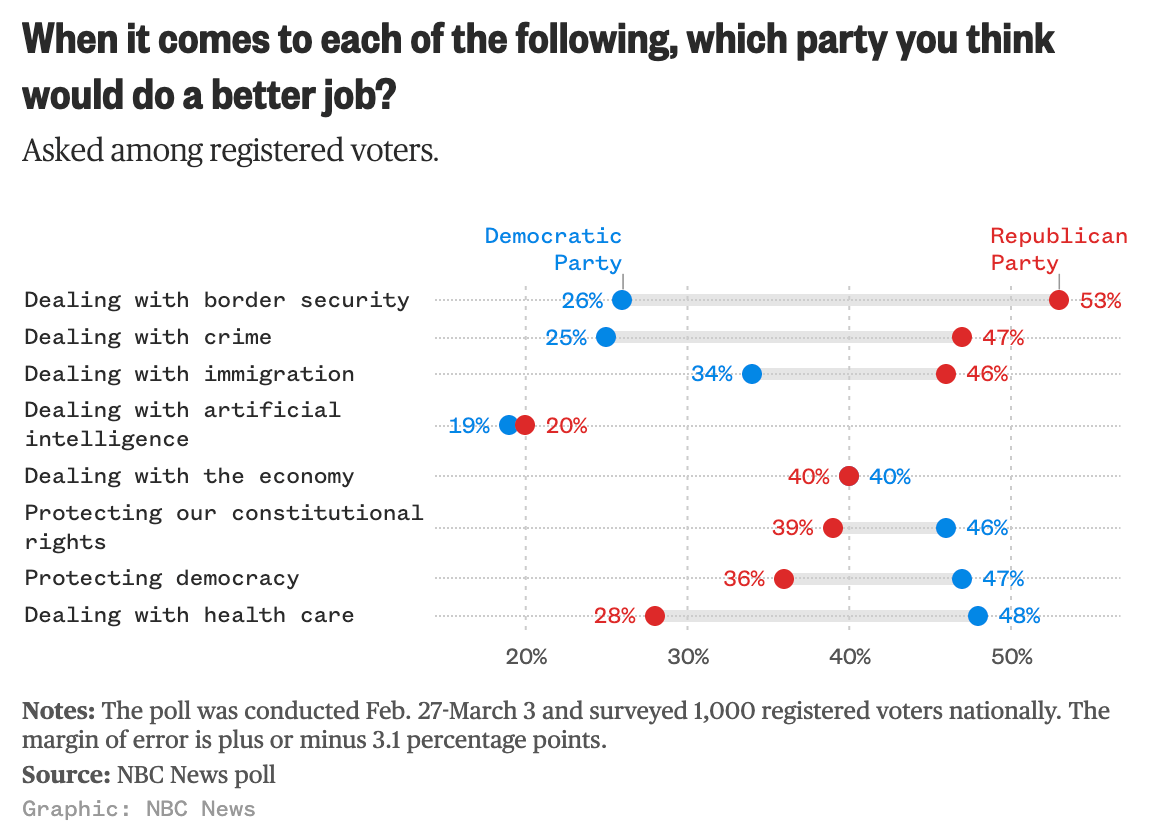
Keeping Trump unpopular - and Democrats relatively more popular - will require a lot of restraint, and not just from politicians.
The first quarter of the year ends at midnight, which means you’ll have a tremendous amount of “urgent” emails and texts headed your way. Get ahead of that anxiety and head on over to the Welcome Win The Middle slate of candidates. 100% of your contribution goes directly to candidate campaigns who need it most, will win back Congress, and will improve the relative popularity of Democrats!
So much this!
“Civil society actors who are serious about stopping and reversing authoritarian drift should ask themselves a clarifying question: “Do the policy positions we hold currently appeal to a broad majority of Americans, including the median voter?”
Trump’s lack of popularity isn't a proxy for Democratic enthusiasm. They’ve become the default 'not-him' lever, nothing more. IMO, the Left has actually regressed. I’m fully prepared to be utterly disappointed once they're back in power. Same cycle, different year.