


As the year draws to a close, it’s worth checking in on the Independent voters who will ultimately decide whether Democrats take a majority in 2026 and exploring a perennial question: whether opposition to Trump and his agenda is translating into support for Democrats. While the results of the 2025 elections have given Democrats a sense of momentum (they’re so optimistic they don’t feel the need to examine what went wrong in 2024), the polling data continue to suggest that 2026 isn’t shaping up like 2018.
Before we dive in, check out our end of the year fundraising recommendations!
Independent Check
The good news for Democrats is that Trump is losing favor with Independent voters.
The latest Gallup polling shows Trump’s approval with Independents plummeting throughout the year, from the mid 40s to a new low of 25%.
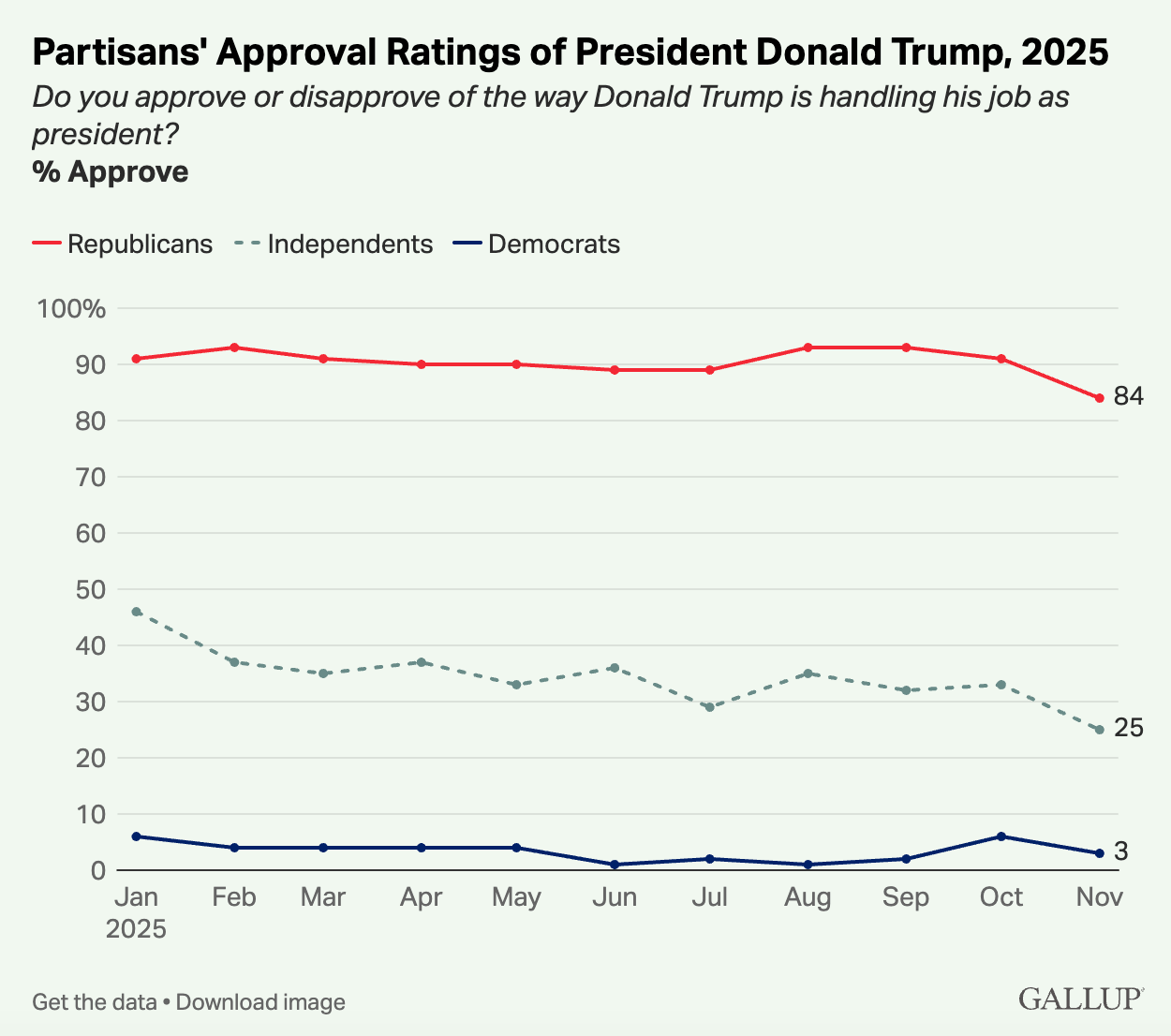
On specific issues, Trump’s rating among Independents is low. Trump’s approval on crime (38%), foreign affairs (31%) and immigration (29%) remains stronger than healthcare policy (23%) which Democrats have made much more salient, but he’s not doing well on any of the issue domains.
Trump’s failure to address the affordability concerns that propelled him to a second term is dragging him down.
Voters Sour on Trump, But Aren’t Rushing To Democrats
However, that weakness for Trump isn’t translating into generic ballot strength for Democrats. At this point in 2017, Democrats led the generic ballot by around 12 points. Right now, they lead by 3.5 points.
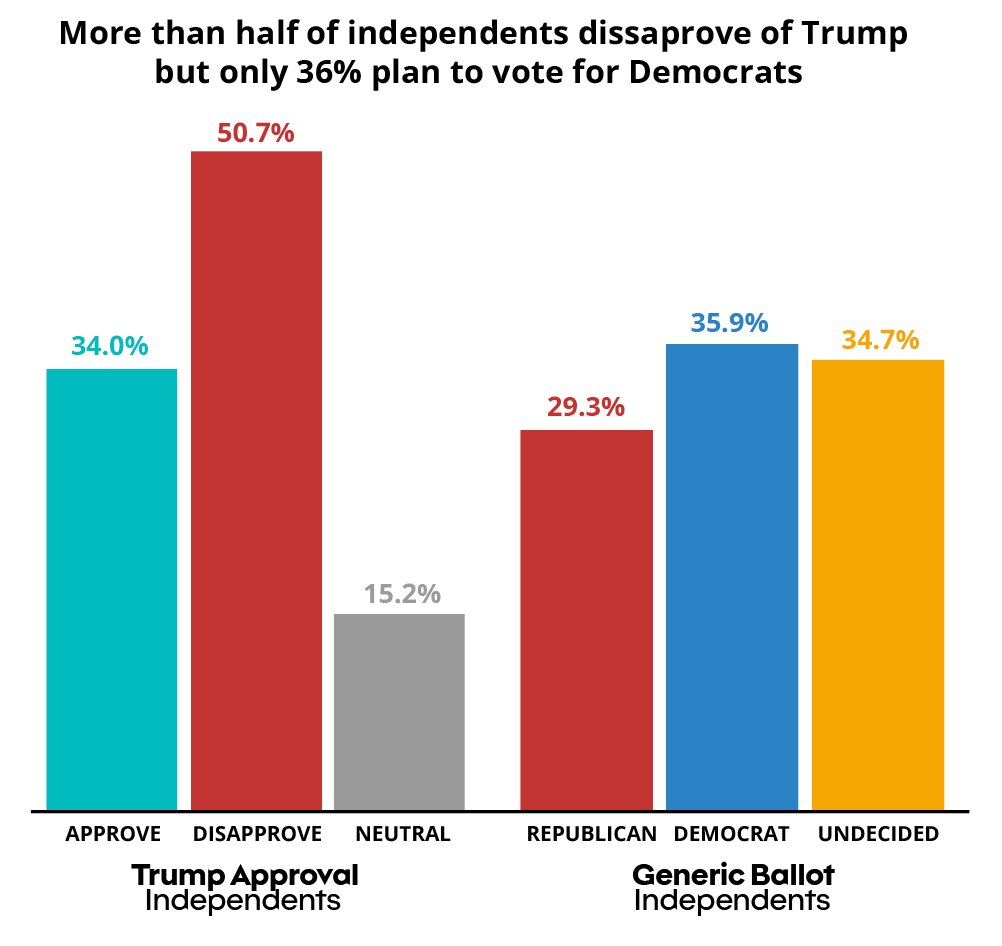
Recent Emerson polling illustrates this dynamic: while 51% of Independents disapprove of Trump, only 36% plan to vote for Democrats. But while only 34% of Independents approve of Trump, 29% of Independents plan to vote for Republicans. A 17 point approval gap is converting into only a 7 point generic ballot advantage among Independents.
Worse, according to data from YouGov, the Democratic Party’s favorability with Independents has dropped from -33 to -42 from February of this year to September.1
Even as voters question Trump, they haven’t rushed to Democrats. Among all voters (not just Independents), Trump’s approval in Emerson polling data has flipped from 49% approve and 41% disapprove to 49% disapprove and 41% approve, that’s a 16 point net swing. However, the generic ballot has shifted from Democrats leading by 44% to 42% (2 points) to 44% to 40% (4 points), only a 2 point swing.
Weakness for Democrats isn’t just visible in YouGov and Emerson polling, according to CNN’s polling with SSRS Research, Democrats had a net favorable rating of -26 at the end of October, down from -19 in September and -15 when Trump was inaugurated in January.
The Path Ahead
In an environment when both Democrats and Trump are unpopular, the path forward for Democrats in swing seats is to differentiate from the left wing of the party.
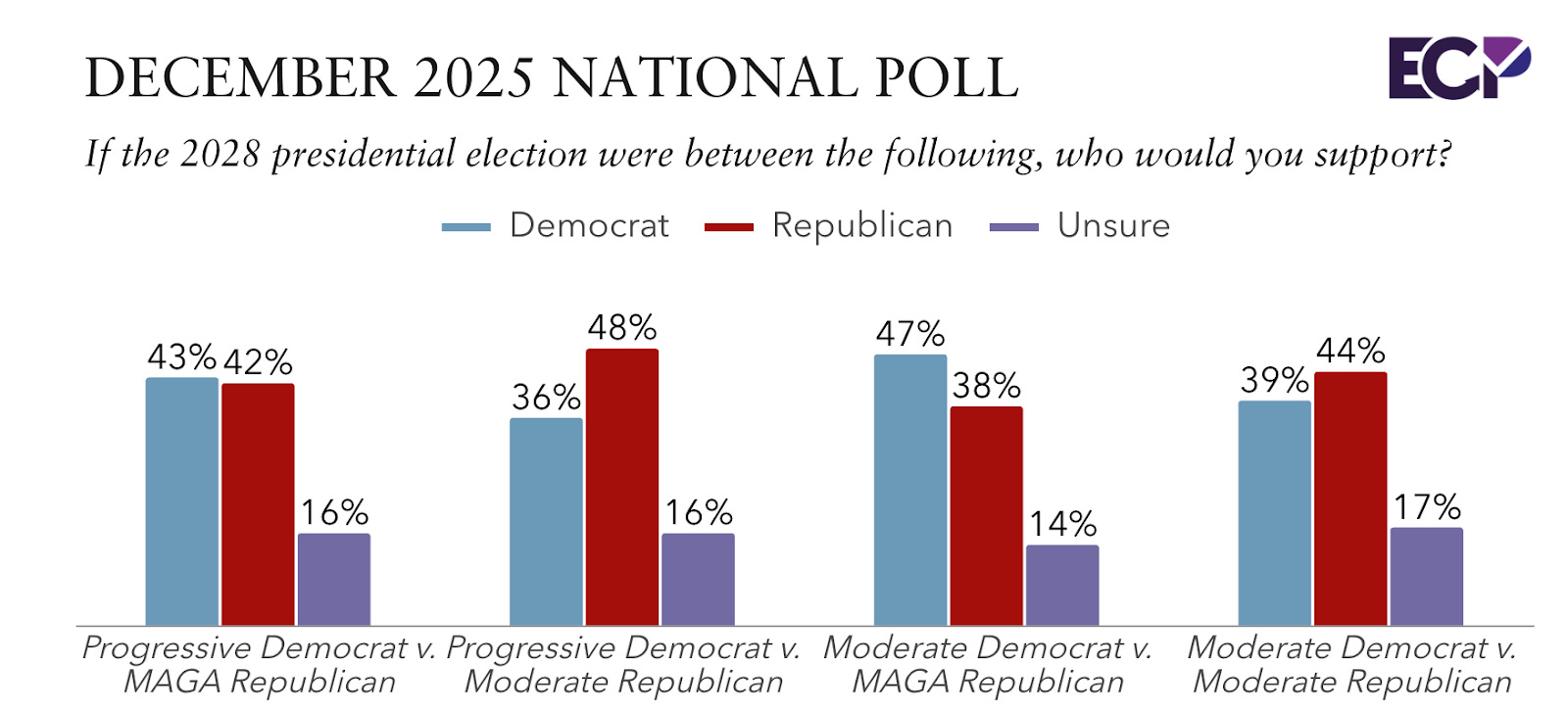
A recent Emerson poll illustrates how differentiation can drive victory. When voters are asked to choose between a progressive Democrat and a MAGA Republican, the Democrat wins by only 1 point. But when asked to choose between a moderate Democrat and a MAGA Republican, the moderate Democrat wins by 9 points. When asked to choose between a progressive Democrat and a moderate Republican, the moderate Republican wins by 8 points. These results will not be surprising to those who follow congressional races.
The horrible national Democratic brand means that Democrats in tough districts still need to differentiate from the party to over-perform. In a D+4 environment, Democrats can’t win districts Trump won by 5 or 8 points without breaking from the party.
Two other forces make the Democratic Party’s task more difficult: with gerrymandering there are fewer “easy” wins this year and because Trump beat Harris by a larger margin than Clinton, Democrats will need to win more Trump-won House districts.
That’s why WelcomePAC recently endorsed a slate of over-performing Democrats willing to break with their party. But winning would be easier if the Democratic Party established a brand that would allow the party to win nationwide. Right now, hoping for Trump’s unpopularity to translate into a victory isn’t working.
The most recent YouGov polls include a “neither” option so they aren’t directly comparable
How do you square your view of the Dem national brand as "horrible" in with the November results?
And while I support WelcomePAC, I don't see the most important candidate distinction as progressive vs moderate. I think voters - including me!- want anyone who they think acknowledges problems and proposes answers to them. I think that explains the Governor wins, Mamdani win, and actually Trump's win last year. Vs. the current view of Dems as disconnected, do-nothing supporters of the status quo. Example: most people think our health care system is too expensive. Yet Dems are not acknowledging that ACA needs to be tweaked to be more affordable. I think we need to do better.